- The Road to Autonomy
- Posts
- Field Report: Waymo SFO and Highway
Field Report: Waymo SFO and Highway
This Week in The Autonomy Economy

The Road to Autonomy
March 08, 2026

This Week in The Autonomy Economy is presented by Koop, insurance for robotics and autonomous vehicles
This Week in the Autonomy Economy, we hit the road and headed to Silicon Valley for Kodiak’s Signal event, Waymo expanded to Miami Beach and opposing autonomous vehicles and trucks is emerging as the new litmus test for Democratic politicians.
First, it was the 2026 Billionaire Tax Act (Initiative No. 25-0024) filed by the SEIU-UHW (Service Employees International Union–United Healthcare Workers West) and now it’s the automation/autonomous litmus test.
Since the 2026 Billionaire Tax Act ballot initiative was introduced, an estimated $1 trillion in wealth has fled the state. That’s trillion with a T. The Hoover Institution estimates the net present value of this permanent loss in income tax at $24.7 billion.
This isn't just a headline, it’s a budget shortfall that leads to higher taxes for all Californians and an accelerated migration exodus with companies leaving as well. The future of the global economy will be built elsewhere with Texas and Florida as two primary beneficiaries.
In New York, The New York Times reports Governor Hochul scrapped a robotaxi pilot as a strategic concession to labor. Now, a proposed law aims to ban AI from the work of licensed professionals. This isn't about protecting jobs; it’s about protecting the status quo.
The American Dream was built on building, hiring, and reinvesting. If we continue to let labor unions set the pace of progress through these litmus tests, we aren't just slowing down technical progress, we are handing the future to China.

WHAT’S MOVING THE MARKETS | FIELD REPORT
Field Report: Waymo SFO and Highway
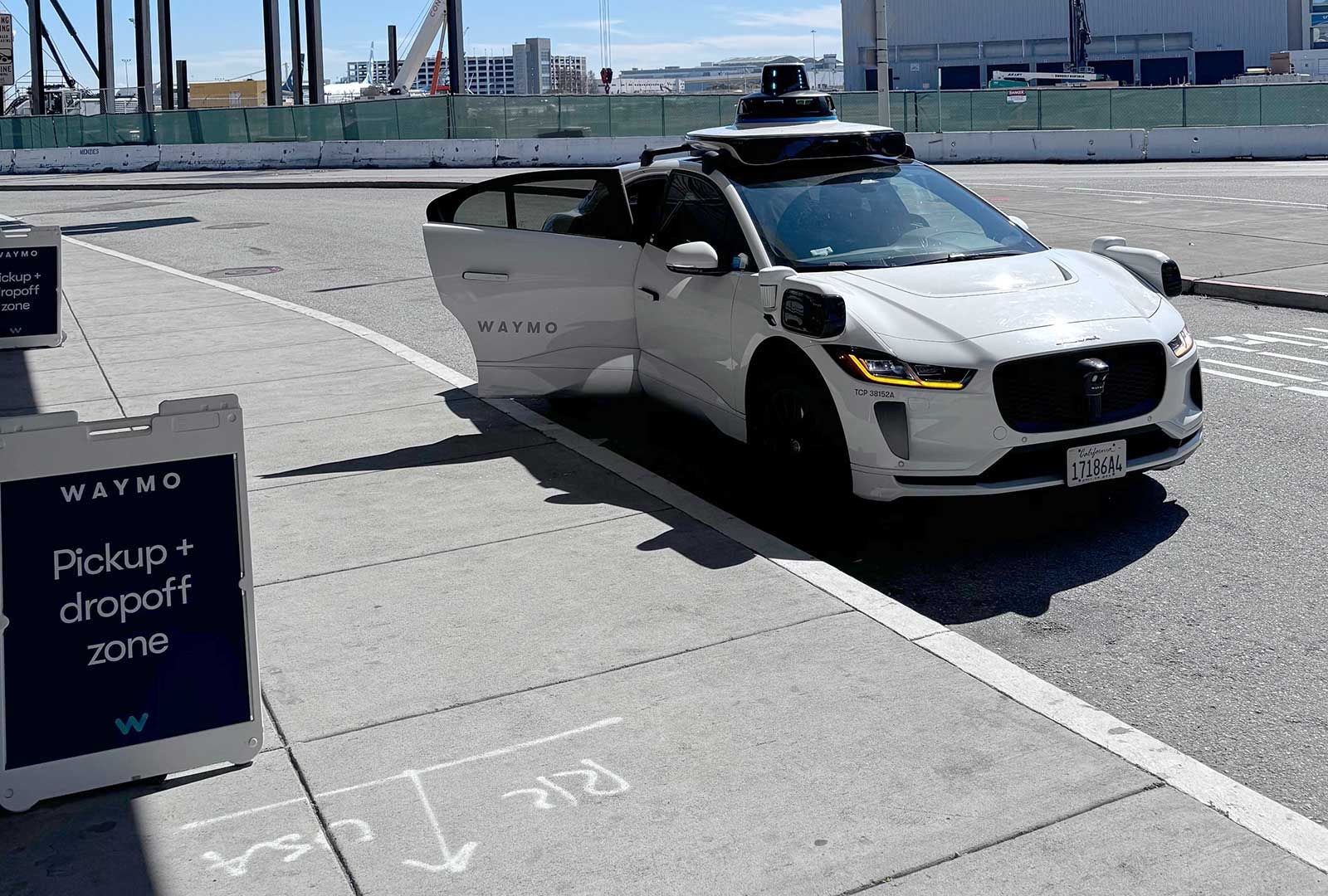
Waymo Pickup and Drop-off Zone at SFO | Source: The Road to Autonomy
Nineteen minutes after stepping off a United flight at SFO, we were sitting in a Waymo heading down the highway towards Silicon Valley.
The walk to the Uber and Lyft pickup area at San Francisco International Airport takes roughly twelve minutes, so an additional seven minutes on the AirTrain to the rental car center is a reasonable trade-off. It's not ideal, but it's easy.
We timed it well. While still on the tram we ordered a Waymo, and when we arrived the car was already waiting in a dedicated Waymo drop-off and pickup zone. Within five minutes we were on the highway heading south towards Silicon Valley.
It was the moment we realized something important: the days of us using rideshare at SFO are over, and they are not coming back.
Our Waymo ride from SFO to Mountain View cost $89.92. For comparison, UberX was roughly $60, Uber Comfort was around $90, and Uber SUV was about $120. The experience made the $30 difference compared to UberX worth its weight in gold.
After a long flight, there is something special about getting into a clean vehicle and having your music transition seamlessly to the car stereo without the friction of being pitched, asked intrusive questions and dealing with the potential of a bad experience.
With Waymo all the downsides of rideshare are washed away and the Forrest Gump box of chocolates problem disappears, as every Waymo ride delivers the same experience every single time.
And once you experience it, you will not go back. Despite the spin that Uber and Lyft regularly put into the market, the future is not a hybrid network, it is a consistent one. One that individuals would be willing to put up with a small inconvenience of an additional seven minutes and slightly higher prices to experience.
Some will argue the current rental car center pickup is good enough. It's not. Even though it was easy, it was not ideal. Convenience drives adoption at airports, and every additional step matters.
The moment Waymo secures curbside access and/or rideshare pick-up access at SFO, the equation changes dramatically. And we will make a big bold prediction. When this happens, Waymo will capture 30% of the airport's rideshare market share from Uber and Lyft within the first 12 months of active service.
That is not a typo. We project 30%. The product is that good, and the incumbent experience is that inconsistent. The only thing standing between Waymo and a meaningful airport share is politics.
That brings us to our highway experience. Our ride from SFO to Mountain View (roughly a mile from Google's headquarters, for perspective) was smooth and the Waymo's performance on the highway was better than most human drivers.
The vehicle operated across all three travel lanes but did not enter the HOV lane. It was smooth. It was comfortable. The California Highway Patrol is going to love Waymo, because the vehicle did not exceed the posted speed limit by a single mile per hour. Law abiding to a fault.
And then something happened that I have never experienced in an autonomous vehicle. The Waymo honked. A driver doing what appeared to be 90+ mph cut in front of the vehicle from the far left HOV lane. The Waymo responded by honking the horn. We were playing Phish at the time and thought it was Trey on the guitar. It was not. It was the car acting just like a human on the highway.
Compared to Tesla FSD on the highway, particularly in Hurry or Mad Max mode, Waymo is noticeably more conservative. Fewer lane changes. Stricter speed limit adherence. But from a pure comfort standpoint, the two are nearly indistinguishable. If you were blindfolded in either vehicle on the highway, you would struggle to tell the difference.
After spending several days riding around in Waymos in Silicon Valley, the conclusion is unambiguous. Autonomous vehicles that operate as a dedicated service are the future and once you experience them, you never want to go back to traditional rideshare services that are gradually morphing into hybrid networks.
The consistency. The calm. The privacy. Not to mention, it is a fundamentally better product, and once you experience it, the legacy rideshare model feels broken. But Waymo still has work to do. Drop-off and pickups are challenging and the company still needs a consistent fleet management strategy.
On pricing, Waymo was on average slightly more expensive than base Uber. But here is the tell that you should be watching, Uber was aggressively discounting in my app. 20% off your ride. 15% off your ride. Every time I opened the app, another discount would appear. Without those promotions, Uber was priced on par with Waymo in Silicon Valley.
Even with the discounts, I still chose Waymo. Every single time. That is the consumer signal to watch. When a rider is actively choosing the more expensive option, because the product experience is that much better, the pricing power dynamics in this market are about to shift. Uber knows what is coming. The discounts are the tell.
Waymo on the highway is not a concept. It is not a demo. It is a real product that real consumers can use today, and it works. The combination of airport access and highway capability represents a material expansion of Waymo's addressable market.
Our Take: Waymo is about to become a very big business.
Companies Mentioned: $GOOGL ( ▲ 1.22% )
Waymo is currently ranked #1 with a bullish outlook on the AUTONOMY LEADERBOARD in the autonomous vehicle category.
PIQUING OUR INTEREST
Waymo Expands to Miami Beach Waymo has expanded their Miami service area to 100 square miles, adding Miami Beach to its initial mainland coverage of Downtown, Brickell, and Wynwood. With the footprint growing, are highways, the airport, and Hard Rock Stadium next?
Waymo Begins Testing in Pittsburgh Waymo has begun testing in the Steel City and Chinese-made Zeekrs with safety drivers have started to autonomously drive around as the company prepares to launch a commercial service in the future. To launch commercial service, Waymo will have to secure an additional driverless permit from PennDOT and meet state requirements for commercial ride-hailing operations.
Human Remote Assistance Agent Failed, Not the Autonomous Driving System An NTSB investigation into a Waymo traffic violation in Austin reveal that the Waymo driver functioned as intended, correctly identifying a stopped school bus and bringing the vehicle to a halt. However, the system was ultimately overridden by a human remote assistant who incorrectly signaled the car to move forward, leading to the violation.
Army Applications Lab Deploys Autonomous Vehicles at Fort Hood Working in partnership with the Army Applications Lab, soldiers at Fort Hood in Texas are experimenting with autonomous vehicles to automate high-risk tasks and keep troops out of the line of fire.
Autonomous Vehicles in Virginia, On Hold Until 2027 The Virginia House has postponed a decision on a Senate-approved bill (35-4 vote) that would establish a legal framework for autonomous vehicles to operate in the Commonwealth.
Minnesota Lawmakers Block Regulatory Framework for Autonomous Vehicles Along party lines, a Minnesota House committee voted against advancing HF3513, a bill intended to establish a statewide regulatory framework for autonomous vehicles.
Autonomous Trucking Bills Begin to Once Again Appear in State Houses State legislatures across the country are seeing a renewed influx of autonomous trucking bills, creating a patchwork of proposed regulations that either restrict autonomous trucks or pave the way for commercial operations.
California’s Future Governor May Hit The Brakes on Autonomous Trucking Leading Democratic candidates for the Governor of California are signaling support for union-backed mandates requiring human safety drivers in autonomous trucks.
Same Story, New Slogan The Teamsters are back at it again, this time with a new slogan: "AI Doesn’t Vote, We Do." To no surprise, they have come out forcefully against autonomous vehicles in Illinois. Our slogan is: AI Creates Jobs, AI Powers Economic Growth.
Union Says No to Robotaxis, Hochul Says Ok Bye Bye Robotaxis New York Governor Kathy Hochul abruptly scrapped a planned New York robotaxi pilot program, reportedly using the move as a strategic concession to labor unions whose support she needs to pass a major overhaul of the state's soaring auto insurance costs.
DoorDash Labs to Launch Autonomous Delivery Robots in Fremont This month, DoorDash will begin autonomously delivering goods in Fremont, California, with their bespoke Dot autonomous delivery robot.
UK Insurers Dismiss Claims of Autonomous Vehicle Market Disruption Despite analyst fears that autonomous vehicles will undermine the sector, the CEOs of UK insurance companies Admiral and Aviva forecast continued growth for the domestic retail car insurance market through at least 2040.
FSD Supervised Coming to Japan According to Richi Hashimoto, Country Manager, Tesla Japan, Tesla FSD Supervised is slated to launch in the country later this year.
Oxa Raises $103m Series D UK-based Oxa raised $103M Series D led by the National Wealth Fund and NVIDIA’s NVentures to scale their Industrial Mobility Automation platform across the UK, Europe, and the Middle East.
Momenta Files for Hong Kong IPO Momenta, a Chinese autonomous driving company, filed confidentially for a Hong Kong IPO targeting a $1 billion capital raise.
VW Begins Autonomous ID. Buzz Production VW Commercial Vehicles has begun pre-series production of the fully autonomous Moia ID. Buzz AD van powered by Mobileye with the goal of producing 500 units by the end of the year.
📰 Follow @RoadToAutonomy on X for our latest thoughts and insights on the autonomy economy.
SOCIAL BUZZ | AUTONOMOUS VEHICLES
Big Boast, Bigger Questions
Big boastful announcements grab headlines, but facts matter, and the market is paying attention. In response, we asked Waabi three fundamental questions on X.
We did not get a response, so we will ask here, again:
Who is the OEM?
Who will own the asset?
Who will manage the asset?
These are fundamental questions that must be answered. If we do get a response from Waabi or Uber, we will publish it next week.
But right now, we need clarity. First, who is the OEM? Second, is Uber going to own Waabi’s fleet of 25,000 robotaxis, in addition to their existing commitment to own a minimum of 10,000 Nuro/Lucid robotaxis? That would be 35,000 vehicles, and at a price of $100k per vehicle (as a hypothetical baseline), that is $3.5 billion in assets. That is not exactly asset-light.
And finally, will Uber manage this new fleet internally through Uber Autonomous Solutions? Furthermore, we need clarification from Waabi on whether this signals a full pivot into robotaxis. Let’s not forget, Waabi has yet to launch a driver-out commercial autonomous trucking service.
Our take: Details are important and so is clarity. Does Waabi want to be an autonomous trucking company or a robotaxi company? Does Uber want to be an asset-heavy company once again? This announcement raises more questions than it answers.
THE ROAD TO AUTONOMY PODCAST
No Lidar, No HD Maps, Six Cameras, One Chip, Autobrains
(March 3, 2026) Igal Raichelgauz, Founder & CEO, Autobrains joined Grayson Brulte on The Road to Autonomy podcast to discuss the company’s strategic partnership with VinFast and the development of an affordable, scalable robo-car.
AUTONOMY MARKETS PODCAST
Waymo Hits the Highway and Should Build Its Own Pit Crew
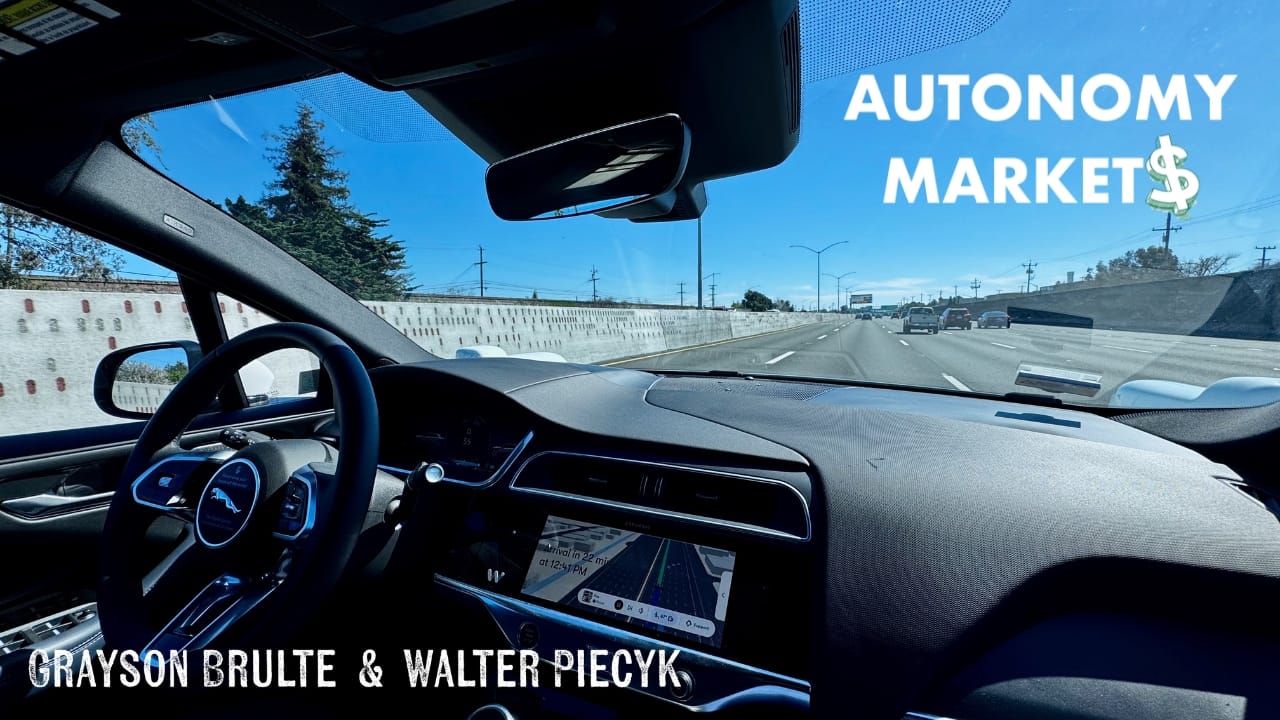
(March 8, 2026) This week on Autonomy Markets, Grayson Brulte and Walter Piecyk discuss Grayson’s recent field work in Silicon Valley and Walt’s observations in London.
The Road to Autonomy® is a media brand owned and operated by AUTNMY AI, Inc. All content, including market intelligence and the AUTONOMY LEADERBOARD, is provided for informational and educational purposes only. AUTNMY AI, Inc. is not a registered investment adviser, broker-dealer, or financial planner, and does not provide financial, legal, or tax advice. Nothing herein constitutes a recommendation to buy or sell any security or financial product. All investments involve risk. Content is provided "as is" and is subject to change without notice. Unauthorized reproduction or distribution, including the use of this content for training large language models (LLMs) or generative AI systems, is strictly prohibited without prior written consent.